



What is offshore wind power?
Offshore wind power is the energy taken from the force of the wind out at sea, which is transformed into electricity and supplied into the electricity network onshore.
You can discover more about the technology used to harness the wind’s energy by reading our article on how wind turbines work.
Is offshore wind power a renewable energy?
Yes. Offshore wind power is a constantly renewable and infinite energy source, and the conversion of wind into power creates no harmful greenhouse gas emissions. As we work to reduce greenhouse gases, offshore wind power can play a role in future electricity generation.
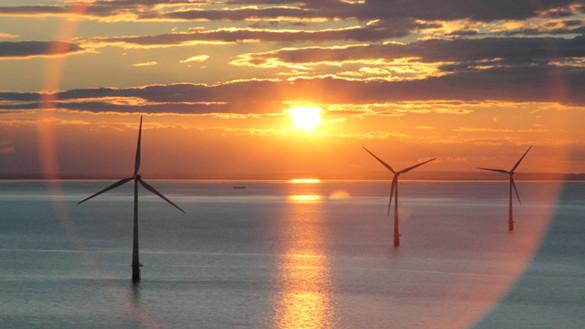
What are the advantages of offshore wind power?
- Distance from local populations, therefore cancelling worries about noise from the rotation of the wind turbine blades and reducing the impact on local environments.
- Space to dramatically increase the number of wind farms and therefore clean energy to homes and businesses.
- Job creation.
How much does offshore wind currently contribute to the electricity mix?
According to energy trend figures from the Department for Business, Energy and Industrial Strategy (BEIS), the share from offshore wind generation increased from 8.5% in the second quarter of 2021 to 11.2% in the second quarter of 2022. That compares to 6.4% for solar and 10.3% for bioenergy and waste.
21 December 2023 saw the record for the highest ever level of wind generation at 21.8GW, providing over half our daily electricity – while a day in November 2023 saw wind contributing its highest ever share to the electricity mix (69%).
Which country currently produces the most offshore wind?
As of June 2024, China is the country with the largest number of offshore wind farms, followed by the UK, Germany and Vietnam.1
However, as of 2023 the UK is home to over 2,000 wind farms – with a total capacity of over 30GW – contributing to 20% of the UK’s total electricity generation. Offshore wind farms have been a significant driver of this growth, with the UK boasting the largest offshore wind capacity in the world.2
Once completed, Dogger Bank will be the world’s largest wind farm. Located more than 130km off the North East coast of England, it will have an installed capacity of 3.6GW and will be capable of powering up to 6 million homes annually with sustainably-sourced electricity.
The UK and its European neighbours have been working together to share clean electricity from offshore wind farms. You can read more about the engineering feats involved in interconnectors.
Are there plans to increase offshore wind generation in the UK?
Yes, the UK Government has set an ambitious target to deploy an extra 40GW of offshore wind by 2030 (making a total of 50GW) – four times more than the 10GW we currently produce and enough to power every home at current electricity usage levels. The UK currently produces enough offshore wind power to provide electricity for 7 million homes.
The Climate Change Committee has advised the UK will need 140GW to meet net zero by 2050; as demand will increase as we shift to clean energy to drive our electric vehicles, heat our homes and power our energy intensive industries, such as data centres.
To enable this additional clean energy to be connected to homes and businesses, the UK’s electricity grid is undergoing the biggest overhaul in generations.
Find out more about The Great Grid Upgrade
Offshore wind: what new technologies are in the pipeline?
Floating wind farms
Floating offshore wind turbines are an exciting technology development. These will allow wind farms to be tethered to the seabed and positioned further out to sea in deeper waters where winds are stronger, thus boosting offshore wind power capacity even further.
Taller wind turbines
The offshore wind industry will be propelled forward – literally – by the creation of taller wind turbines with huge wind blades. The Haliade-X 13MW has been successfully tested and are being supplied to Dogger Bank wind farm, off the Yorkshire coast. A single sweep of its 107-metre long blades will be able to power the average UK household for more than two days and each turbine can provide enough clean energy to power 16,000 British households and save the equivalent of 9,000 vehicles’ emissions in a year.
Interconnectors
Interconnectors – huge subsea cables that link the electricity grids of neighbouring countries – are playing an increasing role in developing capacity between the UK and Europe, providing greener, cheaper and more secure energy for consumers.
In 2023 alone, National Grid’s interconnectors prevented more than 2 million tonnes of CO2 emissions, equivalent to planting 100 million trees or taking almost 1 million cars off the road.
We now have almost 8GW of interconnector capacity to Norway, Denmark, France, the Netherlands and Belgium, which we estimate will prevent around 100 million tonnes of CO2 emissions between now and 2030.
What are the challenges to increasing offshore wind generation at this scale?
Challenges include minimising the impact on local communities and creating positive relations, while creating the infrastructure to transport extra electricity from the coast to cities cost-effectively – all while creating local jobs.
We welcome the ambition and believe that, while challenging, it’s achievable. The scale of projects in the pipeline is unprecedented. And it’s a stretching target that will need the right regulatory, planning and policy framework to support the requisite investment, both on and offshore, without losing the good will of communities.
There is a huge increase in the amount of electricity cable that the industry needs to produce to support this – enough cable to run from Portsmouth in the UK to Perth in Australia!
Last updated: 12 Aug 2026
The future of offshore energy
The windiest parts of most countries is offshore, out at sea, so putting windfarms out there is the perfect source of renewable energy for us. Find out more about the advances being made in offshore energy and how we'll be using it to generate much more clean energy for a net zero future.
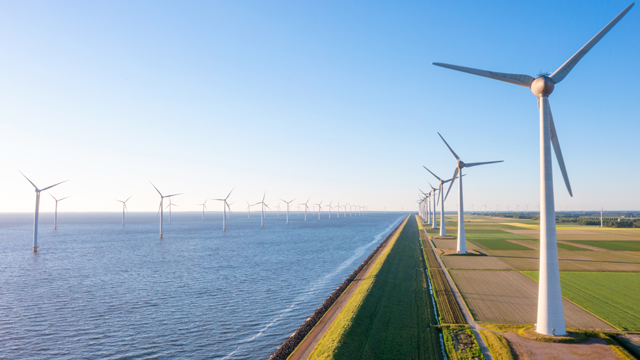
Onshore vs offshore wind energy: what’s the difference?
Onshore vs offshore wind energy: what’s the difference?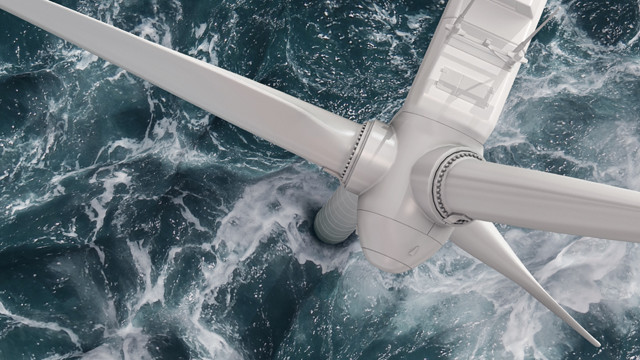
What are Offshore Hybrid Assets?
What are Offshore Hybrid Assets?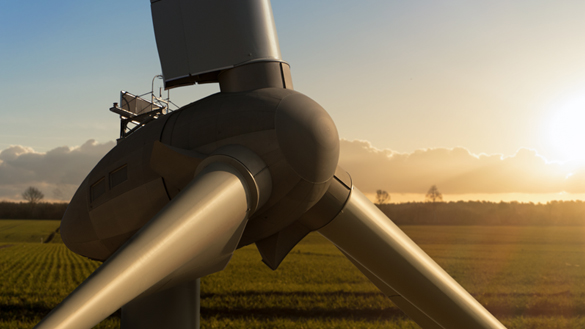
How does a wind turbine work?
How does a wind turbine work?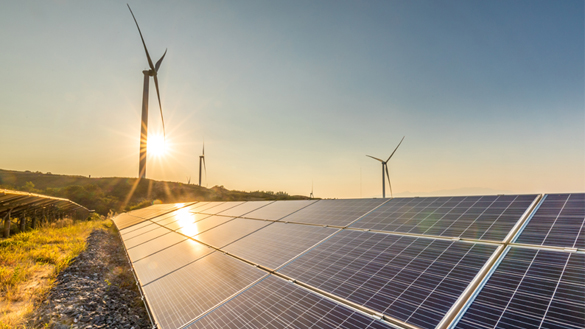
What is green energy?
What is green energy?
Sources
1 Offshore wind farms by key country 2024 | Statista
2 Wind Farms in the UK: The Growth and Impact (greenmatch.co.uk)
3 The White House: Fact Sheet