


Which connection service do you need?
Whether you need a transmission or distribution connection depends on the size and type of project you’re connecting. Most homes and businesses connect locally, while large-scale generators and very high electrical demand may connect directly to the national transmission network.
Transmission
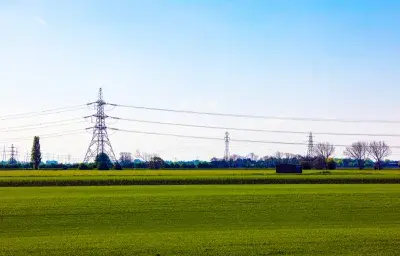
Choose a transmission connection for very large and strategic projects operating at higher voltages, such as:
- Connections above 132 kV, up to 400 kV.
- Large‑scale generation and storage technology, or very high electrical demand
These connection applications are handled by the National Energy System Operator (NESO) that then works with us to deliver your connection.

Distribution
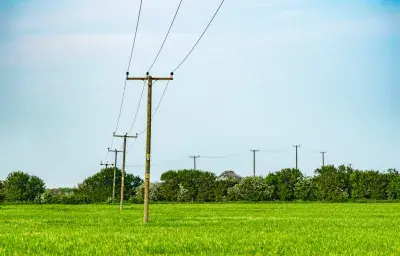
Choose a distribution network connection if your project is likely to connect through the local electricity distribution network. This includes:
- Homes, small businesses and housing developments
- EV chargers, heat pumps and other low carbon technology installations
- Commercial, industrial, renewables or battery storage projects connecting at 132 kV and below
National Grid Electricity Distribution (NGED) manages the local network access across the Midlands, South-West and Wales.
Still unsure? Let us explain...
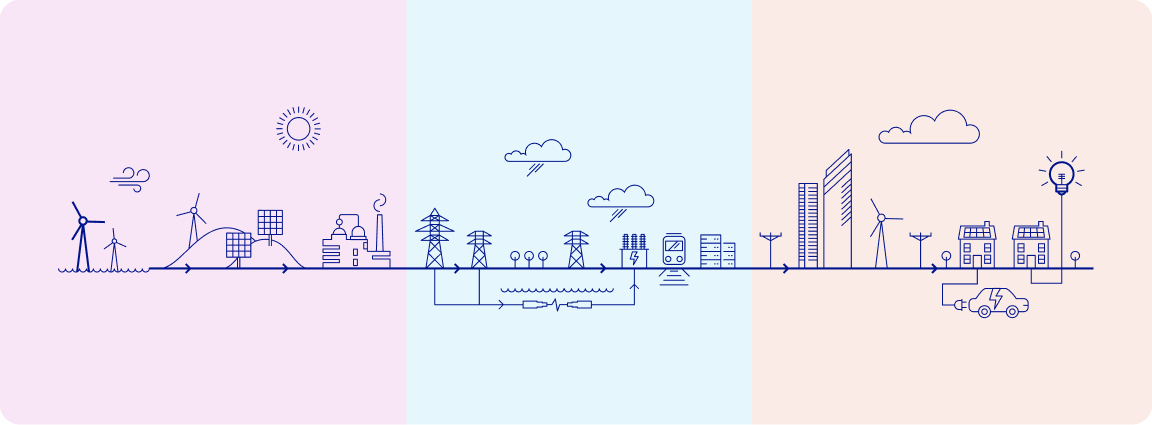
Large-scale generation
Electricity is created, or generated, from renewable sources like wind, solar and hydro-power, and also non-renewable sources like gas, fossil fuels and nuclear power.
Transmission
The transmission network comprising of pylons, overhead lines, cables, and substations, carries electricity at high voltage across the country from where it’s generated.
Distribution
Distribution Network Operators (DNOs) own and operate the lower voltage networks that link the transmission system to homes and businesses ‘distributing’ it at lower, more usable voltages.
Learn more about the organisations and networks involved in your connection
The National Energy System Operator (NESO) is the independent, publicly owned organisation responsible for planning and operating Great Britain's electricity system. It ensures electricity supply and demand remain balanced, so power is available where and when it is needed.
NESO is also responsible for delivering the Connections Reform programme, which is changing how customers connect to the electricity network. For the latest guidance, visit the NESO website.
Electricity transmission is the large‑scale movement of electricity across the country at extra‑high voltage, from where it is generated to where it is needed.
Transmission connections usually apply to assets connecting at voltages above 132 kV, up to 400 kV. The transmission network does not supply homes and businesses directly, instead, electricity is passed to the distribution system, where it is transformed to 132 kV and below for local use.
Across England, Wales and Scotland, there are three Transmission Owners responsible for the national high‑voltage network and transmission connections:
- National Grid Electricity Transmission (NGET) – England and Wales
- Scottish Power (SP) Transmission – Scotland
- Scottish and Southern Electricity Networks (SSEN) Transmission – Scotland
The transmission system connects:
Generators and storage
A wide range of large-scale generation and storage technologies, including onshore and offshore wind, solar farms, battery storage, tidal power, nuclear and gas-powered generation.
Interconnectors
Interconnectors play a significant role in supporting net zero. They may connect offshore wind farms to the transmission system or transfer power between the UK and other countries. This allows power to be imported when demand is high and exported during periods of excess generation.
Distribution Network Operators (DNOs)
DNOs own and operate the lower voltage networks that distribute electricity from the transmission system to homes and businesses. They manage their own assets and connect customers through their own infrastructure.
Large industrial demand
Large electricity users such as steelworks, manufacturing plants, rail infrastructure and data centres may connect directly to the transmission network. Data centres in particular can have significant demand (up to 600 MW) and often require detailed transmission impact studies.
Electricity distribution is the local part of the electricity network. It takes electricity from the transmission system, and from local generation, and delivers it through regional networks to homes, businesses and local sites.
Distribution networks operate at 132 kV and below. Most homes, businesses and local projects connect through the distribution network rather than directly to the transmission system.
A distribution connection may be needed for a new electricity supply, or for changes to an existing supply. This can include domestic work such as electric vehicle (EV) chargers, heat pumps, fuse upgrades, moving a meter or supply, and other supply alterations. It can also include housing developments, commercial and industrial connections, embedded generation, battery storage, diversions and disconnections.
Available capacity can vary depending on the location, size of the connection and local network constraints.
National Grid Electricity Distribution (NGED) manages regional distribution networks across the Midlands, South West and Wales. If your project is outside these areas, you may need to contact a different DNO. Find out your local electricity network operator.
The distribution system connects:
Homes, businesses and changes to existing supplies
Most domestic and small business electricity work is handled through the local distribution network. This can include new connections, EV chargers, heat pumps, fuse upgrades, moving a meter or electricity supply, changing an existing supply and other low carbon technology installations.
Commercial, industrial and housing developments
Commercial and industrial customers may connect through the distribution network depending on their location, requirements and the voltage needed. This can include new supplies, increased capacity, changes to existing supplies, diversions, disconnections and local network reinforcement. Housing developments also connect through the distribution network, with requirements depending on the number of properties, site layout, demand, location and available network capacity.
Embedded generation, solar, wind and battery storage
Embedded generators connect directly to the local distribution network rather than the transmission system. This can include solar, battery storage, wind, Combined Heat and Power (CHP) and other generation technologies. Projects may export electricity to the local network and, where capacity allows, support local demand or export power back towards the wider electricity system via Grid Supply Points (GSPs).
Independent Distribution Network Operators and Independent Connection Providers
Some developments are connected through an Independent Distribution Network Operator (IDNO). IDNOs own and operate smaller independent networks within areas served by DNOs, often for housing or commercial developments. Independent Connections Providers (ICPs) may also design and build connection infrastructure. They are often involved in larger development or commercial connection projects.