Who does what in Great Britain's electricity system?
Many people understandably believe that we manage Great Britain’s electricity system. But there are in fact a number of different organisations that play different roles in making sure the country has the electricity it needs. Here’s what you need to know about how those companies work together, and where National Grid fits in.
Who does what in Great Britain's electricity system?
Many people understandably believe that we manage Great Britain’s electricity system. But there are in fact a number of different organisations that play different roles in making sure the country has the electricity it needs. Here’s what you need to know about how those companies work together, and where National Grid fits in.
At a glance: the companies that run Great Britain's electricity system
| Company | Responsibilities |
|---|---|
| National Energy System Operator (NESO) |
|
| National Grid Plc |
|
| National Grid Electricity Transmission (NGET) |
|
| National Grid Electricity Distribution (NGED) |
|
Who operates the electricity system in Great Britain?
The National Energy System Operator (NESO) manages Great Britain’s electricity system as a whole.
One of NESO’s main jobs is making sure the amount of electricity being generated matches the amount being used. It does this in real time, balancing supply and demand to help keep the electricity system secure.
Beyond this, NESO also manages the process for connecting new generation and demand to the network, coordinates the rules and market arrangements that keep the industry running smoothly, and helps keep the whole system – and the data that underpins it – secure and resilient.
It also looks further ahead, considering how the energy system may need to change in the future and where new or upgraded infrastructure could be needed.
NESO does not own, build or maintain the physical infrastructure that makes up the electricity network. This is the responsibility of transmission owners and distribution network operators, which manage networks across different parts of Great Britain.
Does National Grid own NESO?
No. The Electricity System Operator was previously owned by National Grid but became a separate, publicly owned organisation in October 2024. NESO is owned by the Department for Energy Security and Net Zero, but has its own independent Board and operates independently from the Government and the wider energy industry.
What does National Grid Electricity Transmission do?
While NESO manages the wider electricity system, National Grid Electricity Transmission (NGET) – part of the National Grid group – owns, builds, maintains and develops the high-voltage electricity transmission network in England and Wales.
Our network of overhead lines, underground cables and substations carries high-voltage electricity over long distances, from where it is generated to the areas where it is needed. We keep this physical network safe and reliable, connect customers and develop new and upgraded infrastructure to meet the country’s changing electricity needs.
What’s the difference between NESO and National Grid?
As the owner of NGET, we (National Grid) own and manage our physical network and assets in England and Wales. But we don’t balance electricity supply and demand across Great Britain or make NESO’s whole-system operational decisions.
And while NESO manages the wider system, it doesn’t own or build our transmission network.
How do NESO and National Grid Electricity Transmission work together?
Although we have different responsibilities, we work closely together.
NESO relies on NGET for the availability of our network and accurate information about what our equipment can do, its condition and when maintenance or construction work is planned. It also relies on us to design and deliver the new connections, upgrades and infrastructure the wider electricity system needs.
In turn, we rely on NESO for information about how electricity generation and demand are changing, what the system will need in the future and when we can access parts of the network to carry out essential work. We use this information to plan, operate and develop our network.
So, while our roles are closely connected, our responsibilities remain separate.
Who do I contact if I want to connect to the network?
If you're looking to connect new generation or demand to the transmission network, your contract will be with NESO, and they will issue the connection offer to you. We contract with NESO to carry out the engineering work needed to deliver your connection, from initial studies through to construction.
So, while NESO is your point of contact for the connection itself, we're the ones building what's needed to bring it to life.
Who else is involved in Britain’s electricity system?
There are a number of other organisations who have different - but connected - roles in keeping electricity moving around Great Britain:
The UK Government
The Government is responsible for setting overall energy policy and direction. The Scottish and Welsh Governments set policy in areas of devolved responsibility.
Ofgem
The independent energy regulator protects consumers’ interests and regulates electricity network companies. It also determines how much network companies can invest and recover from consumers through the price-control process.
Other transmission owners
While NGET owns the high-voltage electricity transmission network in England and Wales, Scotland’s network is owned by SP Energy Networks in central and southern Scotland and SSEN Transmission in northern Scotland and the Scottish islands.
Distribution Network Operators (DNOs)
DNOs own and manage the local networks that take high voltage electricity from the transmission system, transform it to lower voltages, and then deliver it to homes and businesses. The DNO for the Midlands, South West and South Wales is National Grid Electricity Distribution (NGED), part of the National Grid group.
Where does electricity come from? The journey of electricity to your home
Where does electricity come from? The journey of electricity to your home
What’s the difference between electricity transmission and distribution?
What’s the difference between electricity transmission and distribution?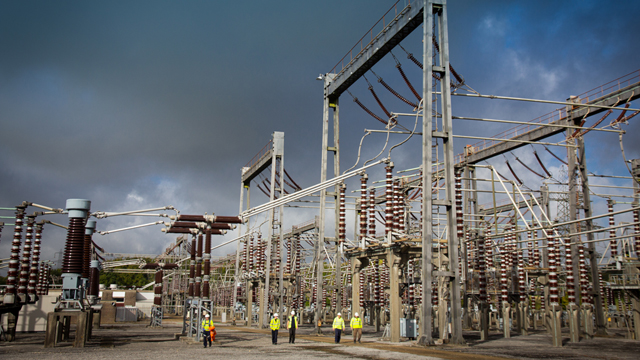
What is a substation?
What is a substation?