


Affordable Warmth Solutions (AWS) a not-for-profit company runs the Warm Homes Fund on behalf of National Grid, installing affordable heating solutions in fuel poor households who do not use gas as their primary heating.
The days when burning coal to generate energy was the worst offender for greenhouse gas emissions are over. In 2019, for the first time since the Industrial Revolution, more of Britain’s electricity will come from zero carbon energy sources than fossil fuels. This shift to renewables like solar, hydro and wind means that energy generation has been overtaken by transport when it comes to carbon emissions.
National Grid Partners – the venture capital and innovation arm of National Grid Ventures – sees the value in this technology to help lead the way in the energy industry and has recently invested in AI specialist SparkCognition (rebranded as Avathon).
As winter approaches, major work is going on hold at the Portbury Wharf Nature reserve near Portishead. Between September and April, all core construction work will stop to minimise disturbance to the many wintering birds who make the reserve their home.
The funding, from the National Grid Hinkley Education Fund, is for the purchase of science, technology, engineering and mathematics (STEM) resources to support the teaching of these core subjects.
In the first two years we have supported 538 local schools and 131,018 young people have benefited, including 24,940 with special education needs or from challenging backgrounds.
We’ve written to all eligible schools with the details. Do encourage your school to apply.
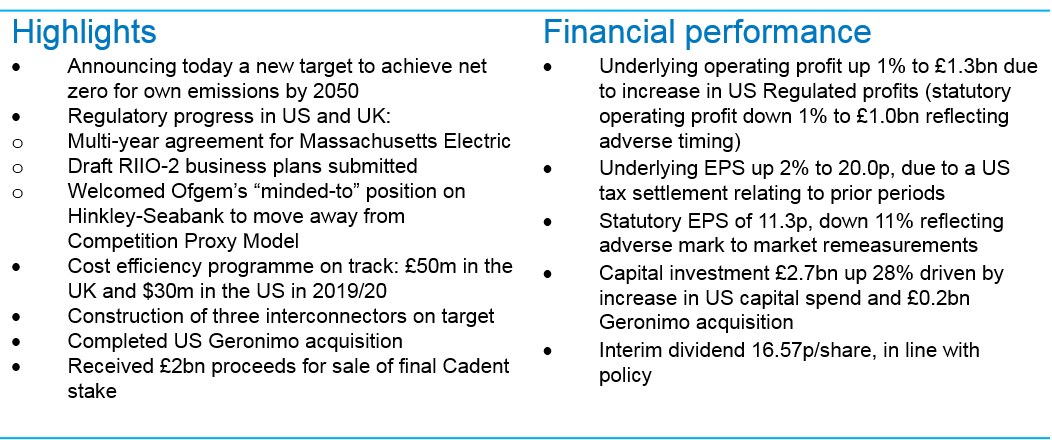
Our previous target was to deliver a 70% reduction by 2030 and an 80% reduction by 2050 for direct emissions from a 1990 baseline. We were on track to get there, having delivered a 68% reduction in emissions to date. But we know that we need to be bolder and more ambitious if we are serious about our commitment to lead the industry in this area. So today we’ve increased our 2050 target to net zero and we’re also reviewing our pathway to get there.
Grain LNG terminal, situated on the Isle of Grain in the Thames Estuary, exported 698 GWh of gas on Wednesday this week, beating its previous record by more than 100 GWh. The amount of gas exported equates to approximately a quarter of the UK gas demand – enough to supply gas to all of London and the South East.
- 698 GWh exported to UK network eclipses Grain LNG’s previous record by more than 100 GWh
- Terminal has seen 110% increase in imports over the same period last year
On Wednesday 13 November 2019, National Grid Grain LNG, Europe’s largest liquefied natural gas (LNG) terminal, exported the highest ever amount of gas in a single day from any European terminal into the UK network.
In the latest round of grant awards, Congresbury Scout and Guide Association has been awarded £20,000 to revamp its HQ; replacing the flat roof, improving insulation and installing solar panels with an energy storage system.
Adam Preece, Chair of Congresbury Scouts and Guides, said: “The grant will enable us to keep our subscriptions low, now and into the future, by meeting the costs of urgent repairs and reducing our operating costs for years to come. This means that our services remain accessible to the whole community and our young people continue to thrive.”