



Excavation damage to underground energy infrastructure, such as pipes and cables, can be a serious public safety concern as well as a source of economic loss. Find out how an AI-powered solution called Urbint Damage Prevention is helping us to prevent this.
How we’re using Urbint at National Grid
Urbint Damage Prevention uses artificial intelligence (AI) to analyse public and private data, helping companies like us predict and prevent safety incidents. This means we can send our teams to the right places at the right time, reducing risks and keeping our networks safe.
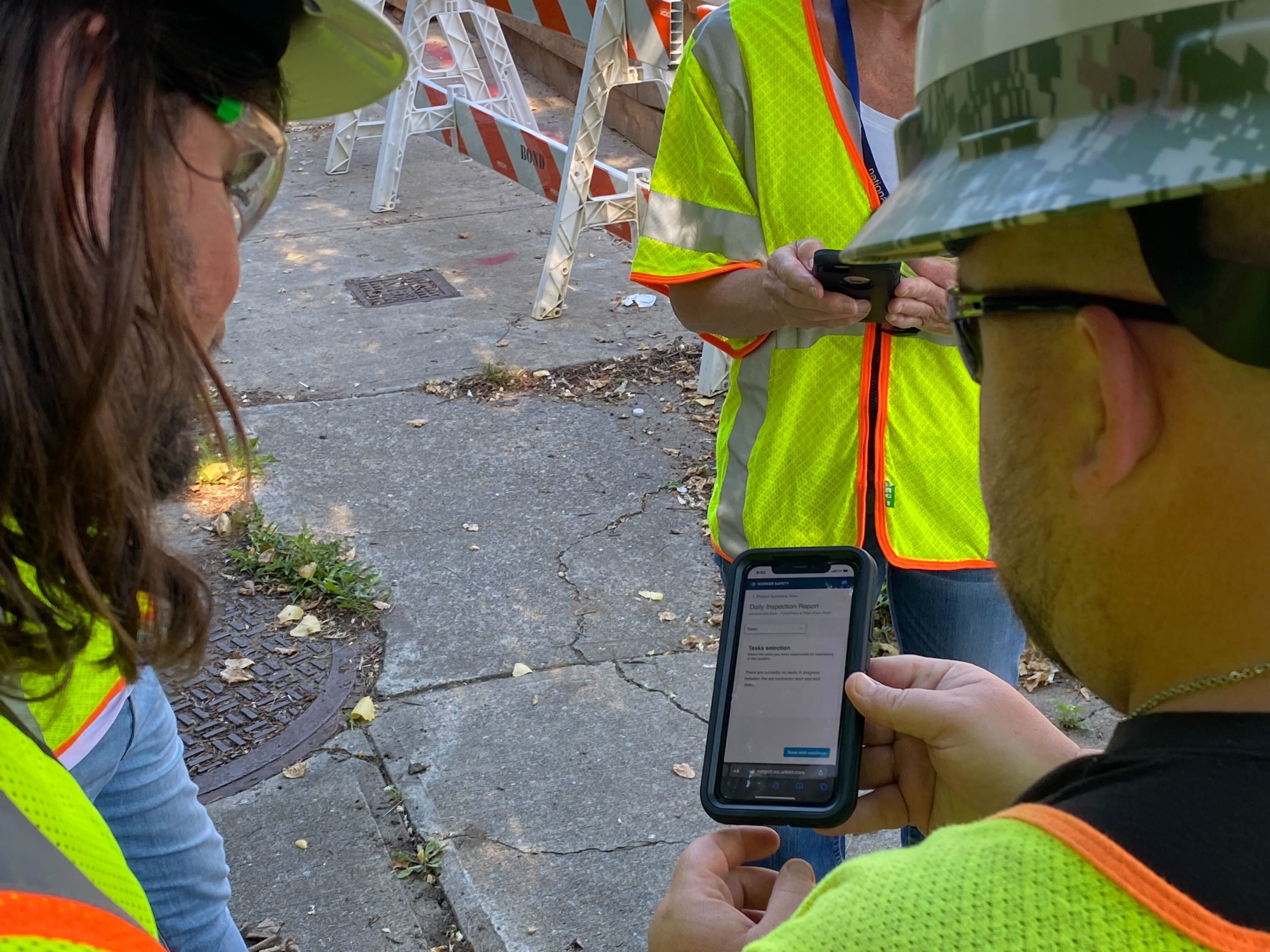
We’ve put the technology to work in our New York business, specifically to help reduce damage caused by third-party digging near underground gas pipes.
We also use Urbint products to manage our storm response and to enhance worker safety.
Reduced excavation damage within the first year
In the first year of using Urbint Damage Prevention in our Northeast US territory, we saw a 37% overall reduction in damage to assets and a 22% drop in third-party excavation incidents.
How does Urbint Damage Prevention work?
Urbint’s innovative “Model of the World” takes information about past incidents (such as third-party damage, leaks, and workplace accidents), combines it with internal data (i.e. age, type and location of the asset involved) and external data (weather, soil conditions, traffic patterns, and urban density), then applies advanced machine learning to predict future incidents that could occur.
Its approach can not only pinpoint which excavations are most likely to result in damage, but it also cross-references municipal areas’/councils’ databases and flags excavation work.
The result? Utility companies, like us, can focus their damage prevention resources more precisely, reducing disruption to critical networks.
Together with Urbint, we make this happen with a combination of:
Risk-based ticket management
Urbint reviews and scores 811 excavation tickets (811 is a US phone-based service people call before digging to have underground utility lines marked for safety) to identify which assets are most at risk, allowing us to focus actions to prevent damage where it matters most.
Predictive analytics
We combine our own internal data (asset age, type, location, historical incidents) with external data (soil conditions, elevation, weather, population density and construction activity) – with Urbint’s “Model of the World” – to assign risk scores to tickets.
‘No call in’ analysis
Urbint identifies specific areas and excavation companies which are less likely to contact 811, so we can carry out extra-targeted safe digging campaigns. For example, on Long Island, up to 45% of incidents were caused by excavators who did not call 811 – nearly double the national average.
Operator indicators
Analysis shows that the excavation company itself is one of the strongest indicators of potential damage; this lets us identify high-risk operators early and take proactive steps to reduce incidents.
Integration and actionable alerts
Urbint integrates with our ticket management systems, GIS asset data and third-party locate companies, and alerts us to excavations near critical facilities, so we can take preventative action.
What benefits does Urbint bring?
Using Urbint is providing us with various practical advantages
- Faster identification of high-risk excavations allowing us to prioritise field teams where they’ll have the most impact.
- Targeted outreach to reduce unauthorised digging: the software can spot where digging that hasn’t been checked via 811 procedures is most likely to occur so we can work on prevention.
- Less disruption and economic loss, thanks to reduced damage to infrastructure.
- Better integration with existing systems: Urbint’s tools connect up with our current systems like ticketing, mapping (GIS), and external locate services, so they fit smoothly into how we work.
- Protecting particularly critical sites: the platform flags excavations near hospitals, schools, and other locations where the consequences of interruptions to supply would be especially difficult.
Find out more about our investments in innovation and projects to accelerate decarbonisation and reduce costs for consumers in our innovation hub