




At National Grid, our job is to make sure the power you rely on is there when you need it. That’s why we’re investing in a smarter, more resilient electricity system designed to keep your lights on and restore power faster when something goes wrong.
One of the ways we’re doing this is with the use of ‘FLISR’ technology which allows us to find network faults remotely and take action to fix them more rapidly.
What is FLISR and what does it mean?
FLISR stands for fault location, isolation and service restoration. Fundamentally it’s about making power networks more resilient by allowing us to resolve faults faster.
When something goes wrong on part of the network, traditional restoration efforts might involve analysis by teams in the control room and field crews travelling, sometimes in poor weather conditions in the case of storm damage, to locate the problem. FLISR can do some of this remotely - usually within around a minute - by using data from devices, sensors, switches, reclosers and control systems out in the field.
This smart grid technology is about more than identifying where a fault has happened though; it can also isolate the affected section of the network, helping us restore power by rerouting electricity through other parts of the system. In some cases, this can even happen automatically, reducing both the number of customers affected by an outage and the time they’re without electricity for.
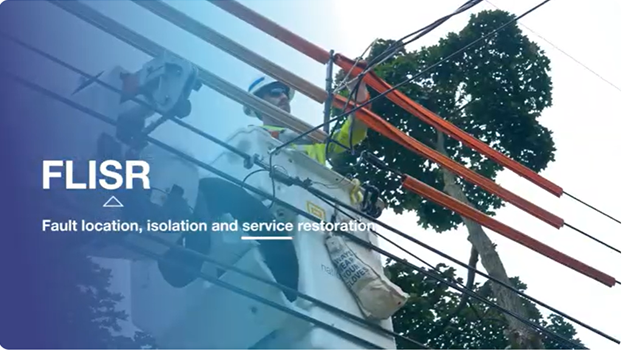
How National Grid is using FLISR
How is National Grid using FLISR?
We’ve implemented FLISR schemes in some of our US distribution network as part of our wider grid modernisation, with exciting results:
- During inclement weather, FLISR has reduced the number of customers experiencing outages by 10–11% across Massachusetts and New York.
- Today, about one-third of our Massachusetts customers and 17% of our New York customers are connected to this technology, and we’re continuing to expand it across more of our network.
Watch the video to see it in action
How does FLISR technology work?
Imagine a winter storm rolls in. Fierce winds pick up and a tree branch comes down, hitting a power line. The lights flicker and then go out. While crews are still mobilising, FLISR goes to work on finding and fixing the problem right away. Its system detects the fault, isolates the problem area, and reroutes power so, depending on the issue, services can be restored in as little as a matter of seconds.
Behind the scenes of this scenario and others, FLISR combines monitoring, communications and automated switching (this means we can isolate customers or move them between feeders to keep their power on). What might typically happen is:
1. The fault occurs
This could be caused, as in the example above, by a tree falling in a storm and hitting a power line, or by equipment failure.
2. The system detects and locates the fault
Sensors and line-monitoring devices measure the flow of electricity and fault current. This helps the system work out where the problem is.
3. The affected section of the network is isolated
Switches or reclosers open on either side of the fault, separating off the damaged section.
4. Power is rerouted when possible
Once the relevant section has been isolated, the FLISR system can close tie switches to neighbouring feeders, allowing power to flow from another route and restoring supply to customers on unaffected sections.
5. Crews can focus on fixing physical faults
If a part of the power network is damaged and needs repairing at this stage, FLISR speeds this up by narrowing down where the issue is and reducing the number of customers waiting for full restoration.
How does FLISR benefit the electricity network?
FLISR brings a host of benefits for utilities like us:
Shorter and fewer outages for customers
By isolating a fault and restoring unaffected sections of the network more quickly, FLISR reduces the scale and duration of power interruptions for customers.
Better visibility for control room teams
FLISR equipment provides additional monitoring data for engineers and control centre operators. This can support faster decision-making and more effective restoration planning during faults.
More remote control capability
Reclosers (smart devices on power lines that automatically detect temporary faults) and automated switching devices allow operators to manage parts of the network remotely, rather than relying only on manual switching out in the field. This could be particularly useful during poor weather or other situations where safety for field crews could be an issue.
Improved resilience during storms
When severe storms hit, utilities often face multiple faults at once. FLISR can help limit the customer impact of these by automatically restoring unaffected sections where the network has enough capacity and suitable switching arrangements.
A fault-fixing solution for a modern grid
FLISR matters more than ever because the modern electricity network is becoming more complex. Power no longer flows in only one direction from large power stations to ‘passive’ customers who use it. More homes, businesses and communities now have solar panels, batteries, electric vehicles and flexible demand. That’s why we’re continuing to expand FLISR across our network, bringing this technology to more communities and increasing the number of customers who can benefit from faster restoration when faults occur.
Improving reliability in our networks
At National Grid, we bring energy to power possibilities and reliability is central to that. We’re committed to upgrading our systems so we can respond faster and work more efficiently for our customers; FLISR is an important part of making that happen.

Emerald AI: cutting data centre energy use in under a minute
Emerald AI is showing how AI-powered data centres can enhance the UK’s electricity grid and speed up the connection of new data centres to the grid.
Emerald AI: cutting data centre energy use in under a minute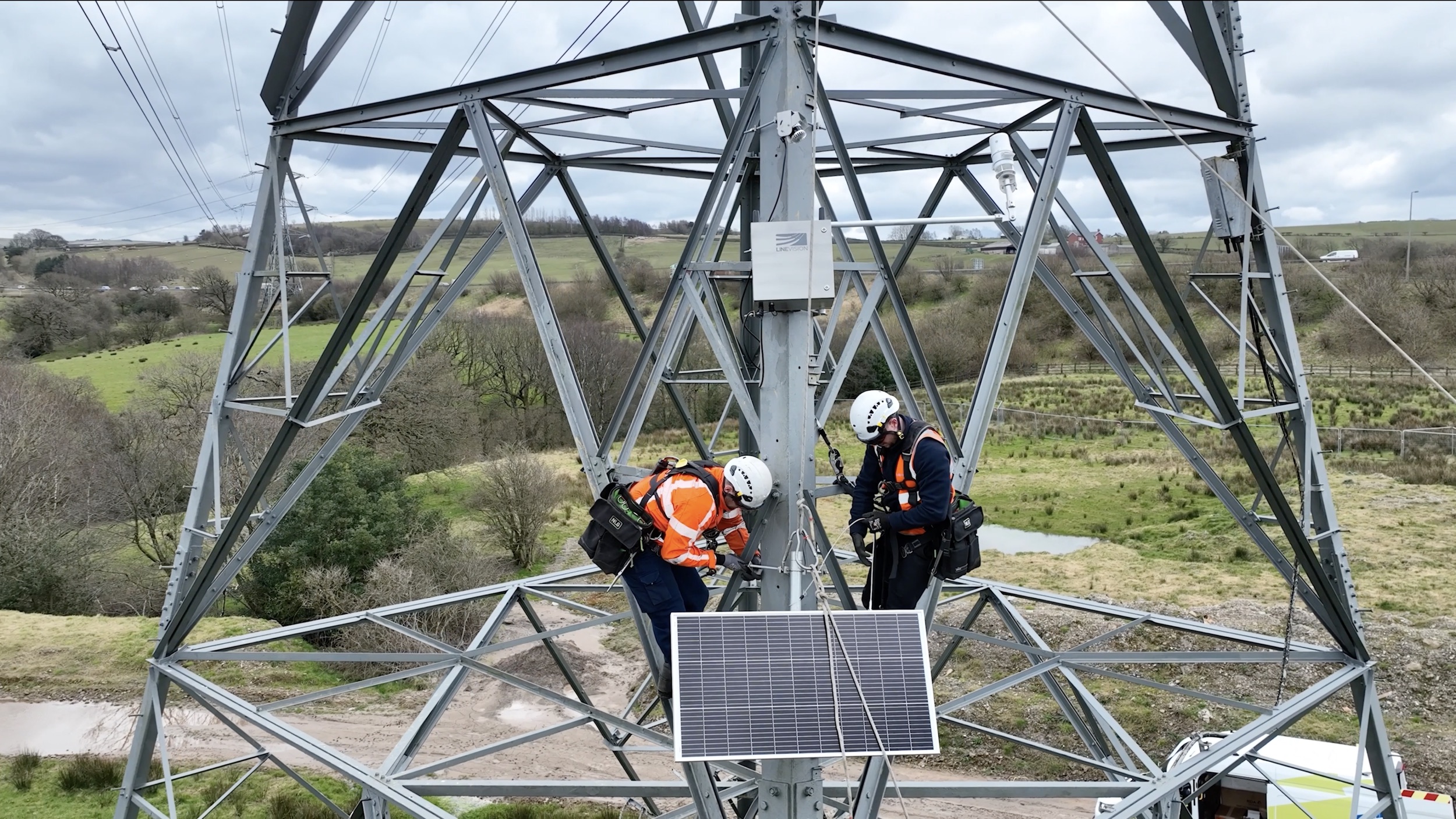
Dynamic Line Rating
DLR technology such as Linevision unlocks extra capacity on overhead power lines, enabling more power to flow through our transmission networks.
Dynamic Line Rating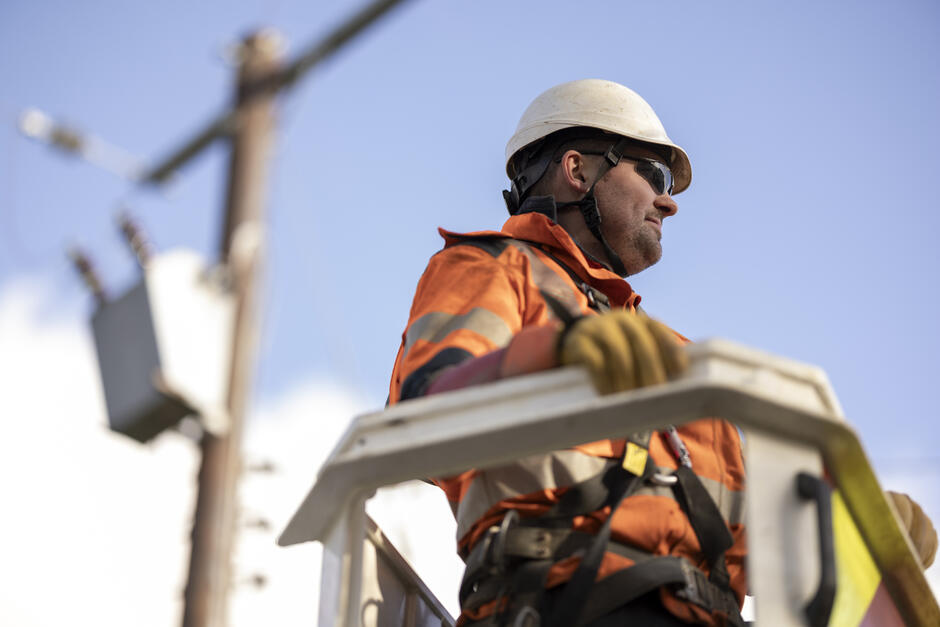
Wireless electricity transmission
The idea of wireless electricity has been around for many decades, but now technology developments could make ‘beaming’ power a reality.
Wireless electricity transmission
Preventing digging damage with Urbint AI
Excavation damage to underground infrastructure can be costly and pose a risk to public safety. Now AI can help us predict and prevent damage caused by digging.
Preventing digging damage with Urbint AI