



Improving our Capabilities in Smarter, Cost Effective DER Dispatch
In late 2025, National Grid launched our Centralized Economic Dispatch Engine (CEDE) tool in Massachusetts- a small but impactful step to help us manage Distributed Energy Resources (DERs).
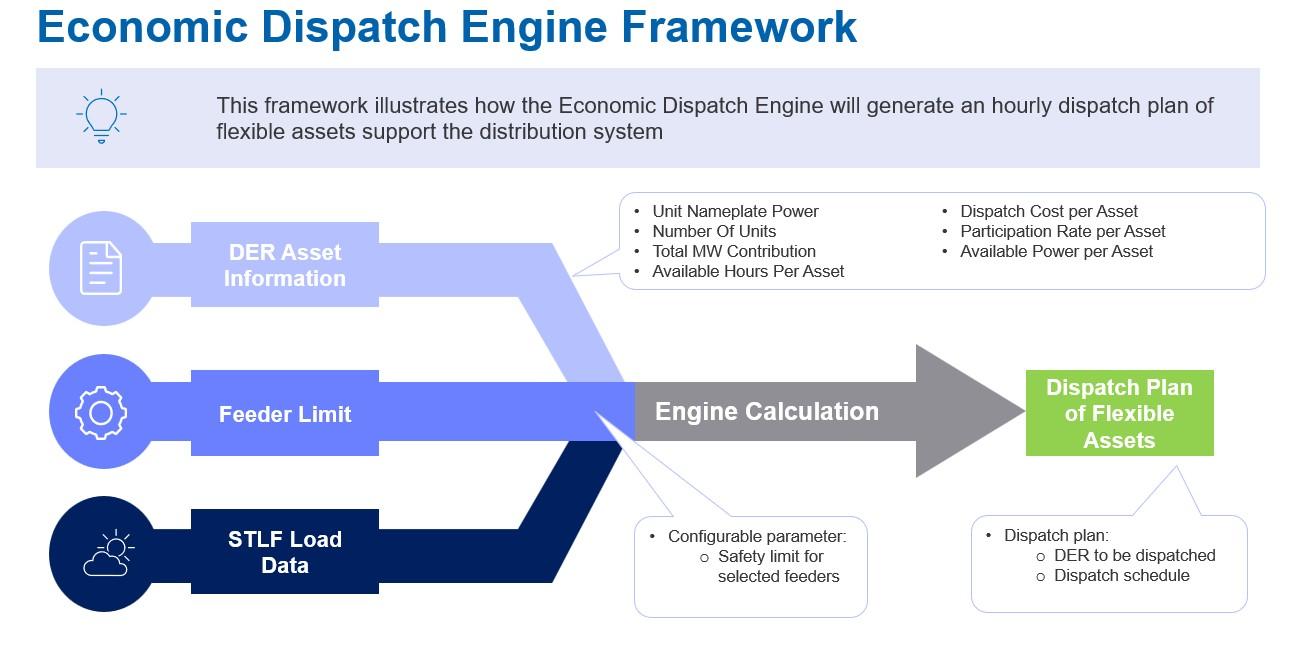
We developed CEDE in-house in just under a year. The tool combines load forecasts, feeder limits, and DER capabilities to create efficient DER dispatch plans that take into account local system limitations and reliability. It helps us to understand how to best use our own distribution assets and customer owned resources to provide the most cost-effective service to the community during times of peak electricity demand.
What are Distributed Energy Resources (DER)?
Distributed Energy Resources (DER) refers to types of electric equipment that can help manage a customer's electric load or export energy to the grid. They are typically customer owned, and included distributed generation such as rooftop solar, batteries, smart thermostats, heat pumps, EV charging stations, and other power control devices.
CEDE helps National Grid and our customers manage DER through a three-step process.
First, the system collects DER asset data, feeder limits, and load forecasts and creates a plan for DER dispatch at the lowest possible cost and customer impact.
Second, it determines which assets to call on, when, and how much capacity is needed.
Finally, it works with our existing systems to alert customers in our Connected Solutions incentive program that we're making a change to reduce overall demand on the grid- for example, raising their thermostat a few degrees or discharging their batteries.
Currently, the company is using CEDE in two regions- the island of Nantucket and the Foxborough area in Massachusetts. Using CEDE to economically coordinate DER dispatch and manage contingency scenarios in these areas allows us to defer the need to make capital investments in upgrades to the network, saving our customers money.
Why CEDE matters
CEDE is a stepping stone toward the full implementation of the Distributed Energy Resources Management System (DERMS). The short-term approach allows us to maintain reliability while we refine how we coordinate CER dispatch.
Justin Woodard, Principal Engineer, Innovative Grid Solutions said:
The development and use of CEDE is an example of how we can use a right sized solution to address our current needs as we move toward a long-term, broad solution with DERMS
The deployment of CEDE yielded several key lessons relevant to future system integration efforts, including the importance of accurate data, incorporation of short-term load forecasts, and establishment of standardised cost frameworks to support optimisation. These findings provide a foundation for advancing National Grid's operational capabilities and preparing for the DERMS platform integration. Once DERMS is launched, it will use innovative algorithms to optimise energy flow in real time, allowing us to quickly connect new customers and infrastructure projects. Advanced control of distributed energy resources will allow us to create a smarter, more efficient energy system that offers new opportunities for grid planning and development. Release 1 of DERMS is scheduled for late 2027, with 3 later releases planned to reach full deployment.