


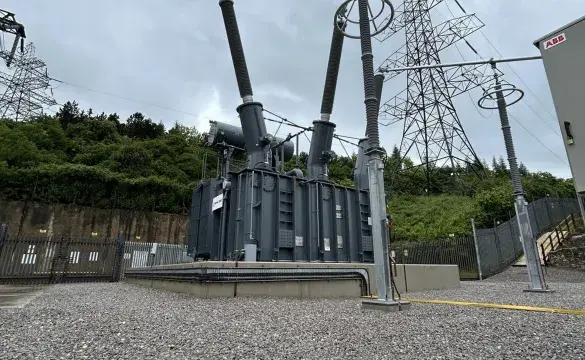
Key milestones at three substations as new equipment is connected
National Grid has upgraded three of its substations with new equipment to enhance voltage control and strengthen the network’s stability.
Shunt reactors – high voltage electrical devices which absorb excess reactive power in alternating current (AC) transmission networks – have been installed and connected at the Cottam, Wylfa and Willington substations.
Each weighing around 130 tonnes, and measuring over seven metres long and almost four metres high, the shunt reactors will enable more efficient network management.
What are the key benefits of shunt reactors?
Reliable voltage regulation: Shunt reactors can either inject reactive power or absorb surplus, helping manage voltage on the network.
Enhanced performance: By stabilising voltage, shunt reactors contribute to improved system reliability and operational efficiency across the network.
Flexibility: They also play a key role in integrating renewable energy by managing voltage fluctuations associated with variable power flows.
Asset protection and longevity: Effective reactive power management reduces electrical stress on system assets such as transformers, switchgear, and cables, helping extend their life and lower maintenance costs.
The National Energy System Operator is responsible for managing voltage on the transmission and ensuring appropriate levels of reactive power. The increase in renewable energy generation and changes in demand for electricity is driving the changing needs for reactive power.
National Grid’s reactors are playing an important role in this key aspect of electricity system management and helping NESO to minimize the costs of balancing the electricity system for consumers.
At Cottam, in Nottinghamshire, the shunt reactor was installed to manage voltage stability following the decommissioning of Cottam Power Station.
At Wylfa, Anglesey, the shunt reactor will support the North Wales network and aid the Dinorwig to Pentir project, which is replacing infrastructure originally installed in the 1970s and adding additional capacity to the network between Dinorwig and Pentir substation, by maintaining voltage stability.
At Willington, in Derbyshire, the shunt reactor is being used to support expansion of the substation.
The shunt reactor in Cottam was energised in March, Wylfa in April and Willington came online in May. These installations form part of National Grid’s significant investment into its transmission network, with £31 billion of investment planned over the next five years to modernise and upgrade its infrastructure.
Paul Gallagher, Operations Director at National Grid, said:
“Shunt Reactors may be a lesser-known part of our network, but they play a vital role in ensuring electricity supplies are stable and reliable.
“I would like to thank all of the teams involved in delivering this complex activity, which involves a considerable amount of planning and coordination, both on time and on budget.
“It is just one part of the wider work that we are doing to maintain and upgrade the network, ensuring it is resilient and fit for the future to support growing energy demands.”