




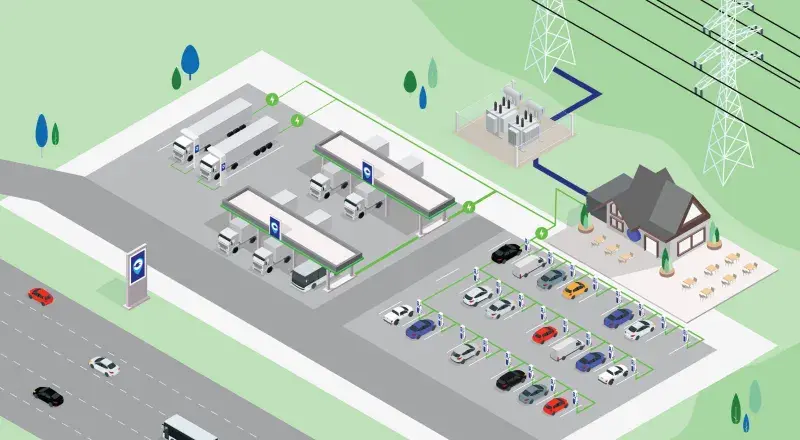
A Roadmap for Meeting Future EV Charging Demands
The transition to cleaner, more efficient electric vehicles (EVs) will accelerate this decade and beyond. We’re looking ahead at how we can help our states build a charging network that’s fast, reliable, and equipped to meet policy- and market-driven demand, from small passenger vehicles to heavy-duty fleets.
Our Electric Highways Study — coauthored in partnership with transportation analytics organizations CALSTART, RMI, Geotab, and Stable Auto — forecasts the future of fast-charging along highway corridors in Massachusetts and New York, providing a first-of-its-kind blueprint for powering the EV transition in the U.S. Northeast to 2045.
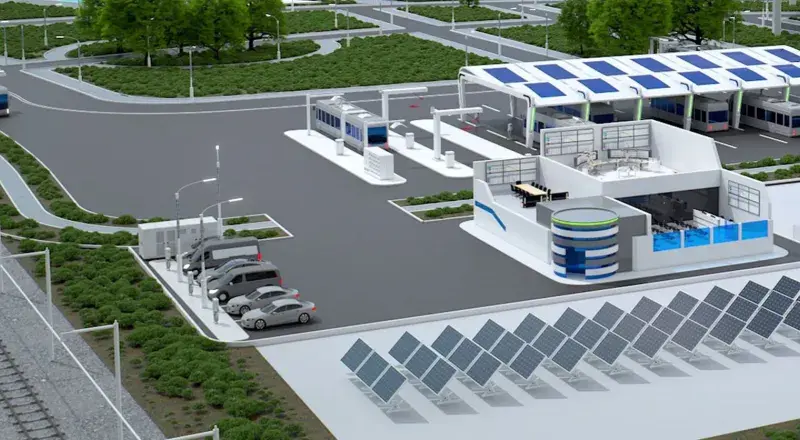
The Road to Transportation Decarbonization: Readying the Grid for Electric Fleets
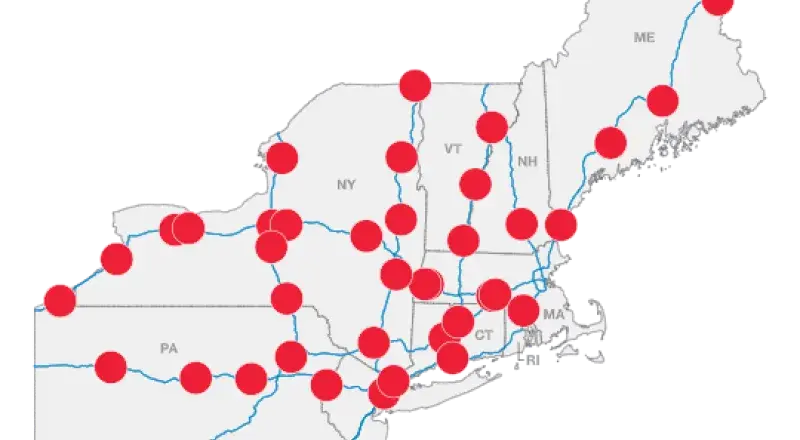
Powering the Future of Freight in the Northeast
National Grid’s Northeast Freight Corridor Charging Plan, developed in partnership with leading energy and transportation organizations, charts a path toward a robust highway fast-charging network for medium- and heavy-duty electric trucks. Covering more than 3,000 miles across nine states, this roadmap identifies strategic solutions to meet critical infrastructure needs and position the Northeast to support growing freight demands.